Planning Permission in Cornwall: What You Need to Know Before Designing a Home Extension
11 Dec 2025 • Written by Timothy Metcalfe

Designing a home extension in Cornwall can be an exciting step, but navigating planning permission is often where homeowners feel unsure. Cornwall has its own landscape, heritage, and local planning considerations, which means understanding the process early on can save time, stress, and unexpected costs.
This guide covers the key things you need to know before starting your extension project in Cornwall.
At forma architecture, we specialise in planning permission, producing the required documentation and guiding you through the approval process, whether it’s for an extension, renovation, or new build. To arrange a free 30-minute consultation, click here, or email us at hello@formaarchitecture.co.uk.
1. Do You Need Planning Permission for Your Extension?
Not every extension in Cornwall requires full planning permission. Some fall under Permitted Development Rights, depending on:
• The size of the extension
• Its height and position
• Whether your home has been extended before
• Whether the property is detached, semi-detached, or terraced
• Its height and position
• Whether your home has been extended before
• Whether the property is detached, semi-detached, or terraced
However, permitted development is more restricted if your home is:
• In a Conservation Area
• In an Area of Outstanding Natural Beauty (AONB) (Cornwall has many)
• A listed building
• In a World Heritage Site (Cornwall has several mining landscapes)
• In an Area of Outstanding Natural Beauty (AONB) (Cornwall has many)
• A listed building
• In a World Heritage Site (Cornwall has several mining landscapes)
Cornwall’s unique heritage means more properties require formal approval than in many other counties.
If you’re unsure, an architectural designer can advise quickly based on your address and a few photos.
2. Special Considerations for Cornwall Homes
Cornwall’s planning policies often focus on:
• Landscape impact – Extensions must sit comfortably within the surrounding setting – particularly in coastal or rural areas
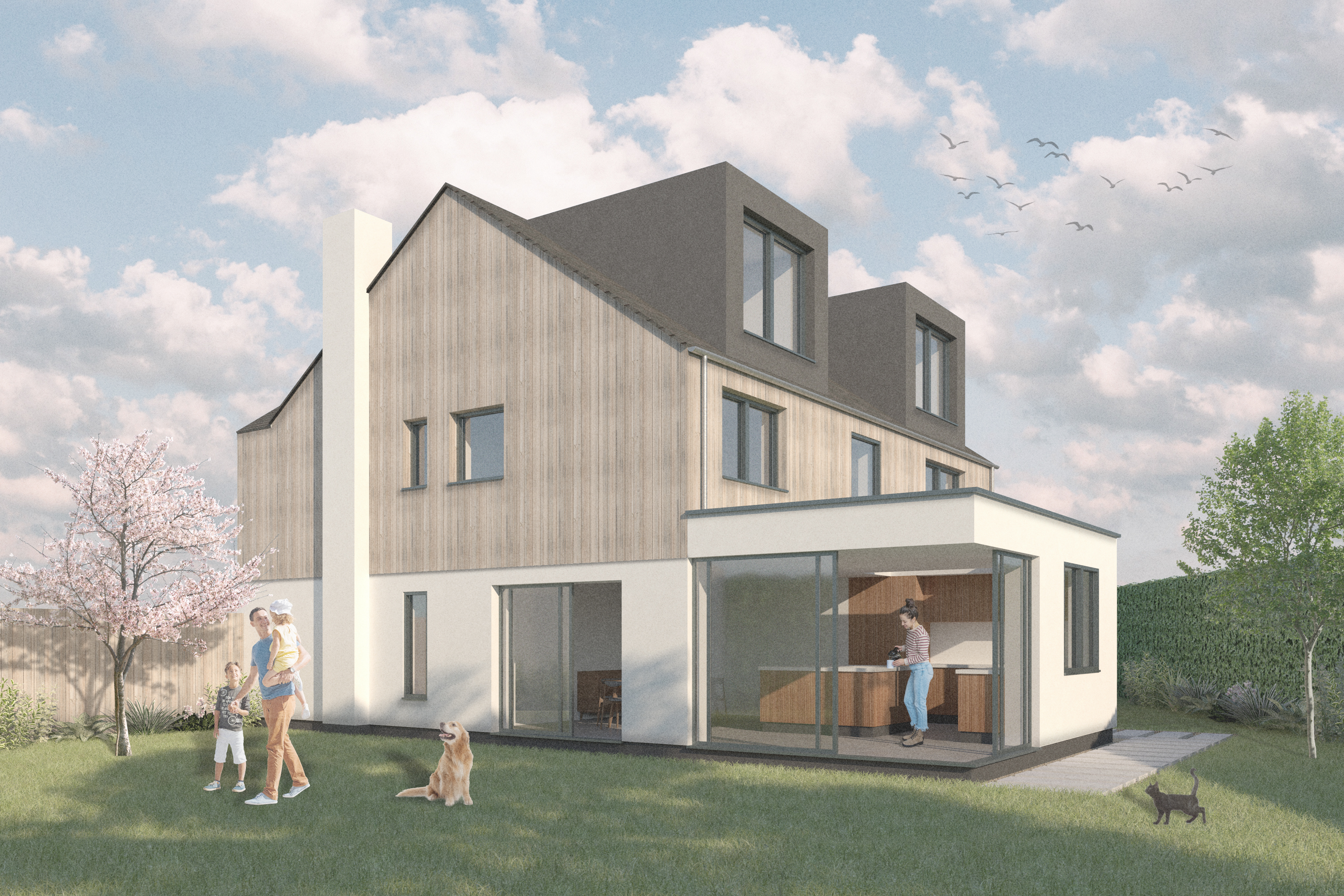
• Materials and appearance – Timber cladding, stone, render, and natural materials are common. Planners often prefer extensions that are modern yet sensitive to local character
• Neighbouring properties – Overlooking, loss of light, and privacy are major considerations in tight Cornish villages
• Parking and access – Narrow lanes and limited parking can influence what gets approved
__________________________________________________
Bring your home vision to life
Ready to create a home that reflects your lifestyle, values, and needs? Let's make it happen together. Whether you want to build, renovate, or extend, we’ll guide you from initial concept to planning approval and construction. Schedule a free 30-minute consultation to get started.

_________________________________________________
3. How the Planning Process Works in Cornwall
Here’s a straightforward overview:
Step 1 – Initial design
A set of drawings is created to show how the extension will look, its size, and how it relates to the existing building.
A set of drawings is created to show how the extension will look, its size, and how it relates to the existing building.
Step 2 – Pre-application advice (optional but helpful)
Cornwall Council offers a pre-app service where you can get preliminary feedback. This can be useful for sensitive sites.
Cornwall Council offers a pre-app service where you can get preliminary feedback. This can be useful for sensitive sites.
Step 3 – Full planning application
Your architectural designer prepares the planning drawings, site plan, design statement, and submits the application.
Your architectural designer prepares the planning drawings, site plan, design statement, and submits the application.
Step 4 – Eight-week decision period
Cornwall Council usually takes around 8 weeks to review an application. They notify neighbours, consult relevant officers, and assess local policy.
Cornwall Council usually takes around 8 weeks to review an application. They notify neighbours, consult relevant officers, and assess local policy.
4. Tips for a Smooth Planning Application in Cornwall
• Understand local context early – Cornwall’s landscapes and village patterns are unique; responding to them helps the application
• Keep the form simple – extensions that are lower in height and visually secondary usually fare better
• Use quality drawings – clear, accurate plans help avoid delays
• Talk to neighbours – keeping them informed can prevent objections
• Choose materials carefully – natural or locally influenced materials often get positive feedback
5. When You Don’t Need Planning Permission
You may avoid a planning application entirely if the proposal falls under permitted development.
Common examples include:
Common examples include:
• A modest rear extension within size limits
• A single-storey addition under a certain height
• Certain side extensions (with restrictions)
• A single-storey addition under a certain height
• Certain side extensions (with restrictions)
You will still need Building Regulations approval, even if planning isn’t required.
6. Ready to Start Designing Your Extension?
Whether your home is in a village, along the coast, or in the countryside, taking a clear approach from the start makes the whole process smoother. By understanding planning requirements and responding sensitively to Cornwall’s character, you can achieve an extension that feels natural, considered, and tailored to your home.
If you’d like help exploring design ideas or confirming whether your extension needs planning permission, you’re welcome to get in touch.
__________________________________________________
Let’s Create Something Exceptional
A well-designed home is an investment in your lifestyle and future. With expert planning, thoughtful design, and efficient execution, we ensure your project meets your vision while staying cost-effective. If you're ready to take the next step, let's discuss your ideas and turn them into reality.

_________________________________________________